Design Journey
Good design creates the conditions for efficient implementation. The design journey shows you how the IBM DevOps Solution Workbench helps you and your team create the right conditions for programming and, in particular, for using AI code assistants.
Work with different projects in the Workbench
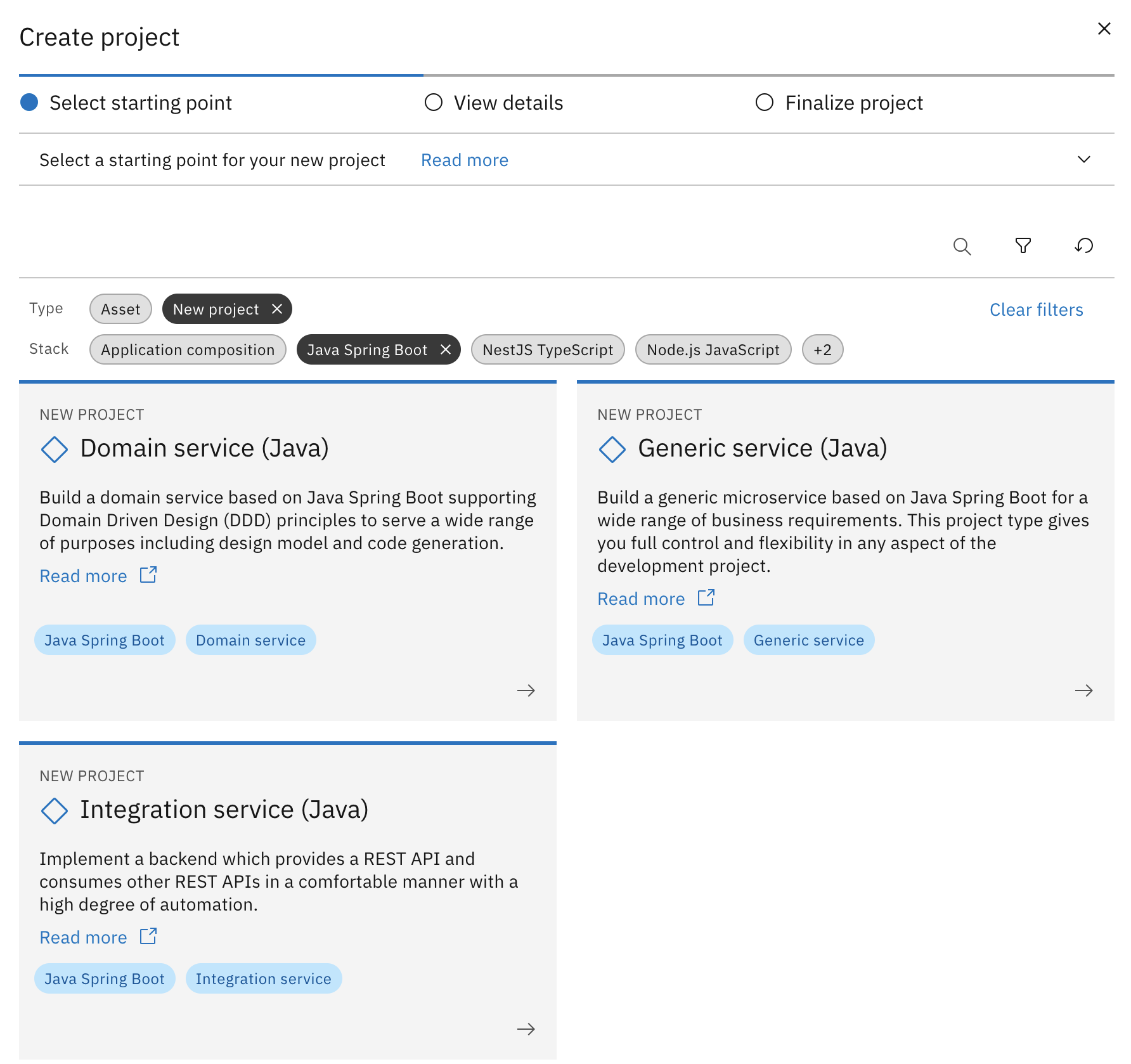
Service projects allow developers to model and implement business logic, service interfaces, data access, and external system integrations using various specialized project types. These include domain services, data services, REST APIs, Kafka-based event consumers or producers, and connectors to third-party systems.
Each project type offers tailored modeling capabilities and varying levels of automated code generation - including connectivity to databases, transaction management, event handling through Kafka, and integration logic - resulting in production-ready code that aligns with enterprise architecture and DevOps practices.
Design business requirements
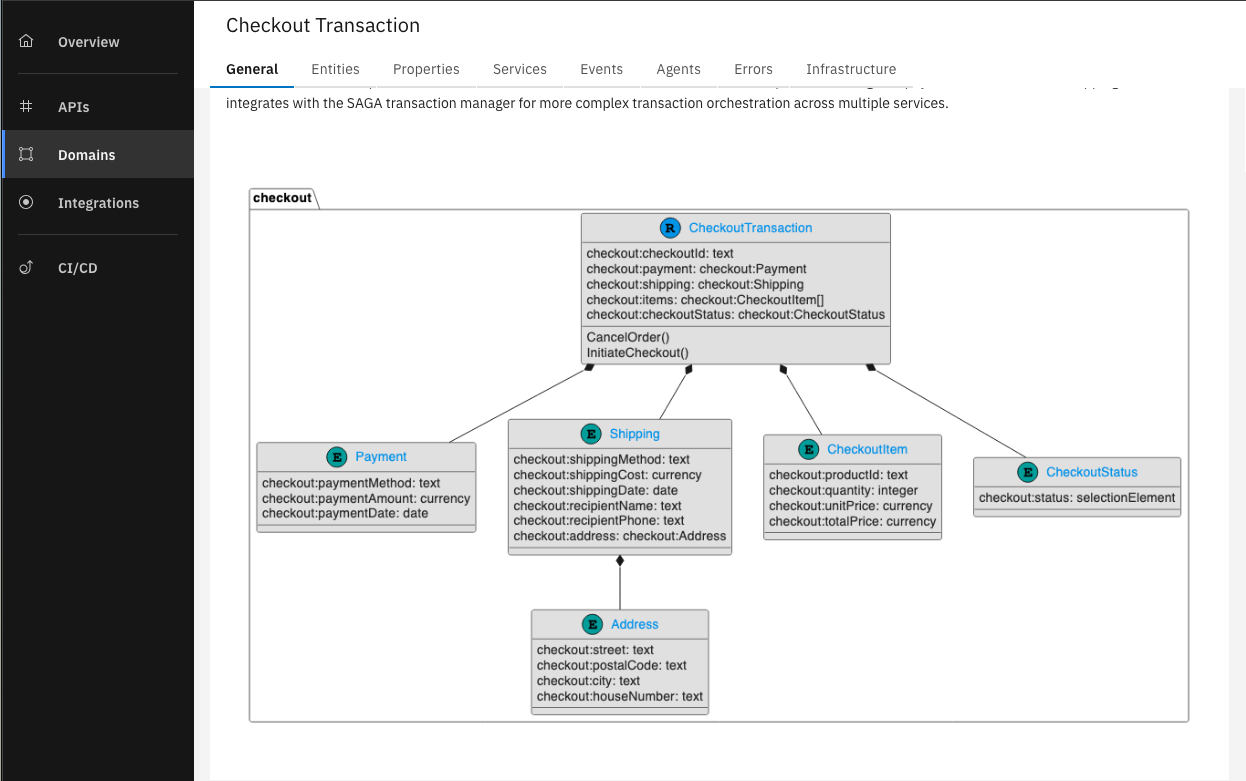
IBM DevOps Solution Workbench empowers you to model every detail of your service, bridging business objectives and system design. This collaborative process helps ensure your architecture delivers on business priorities.
Design service interfaces
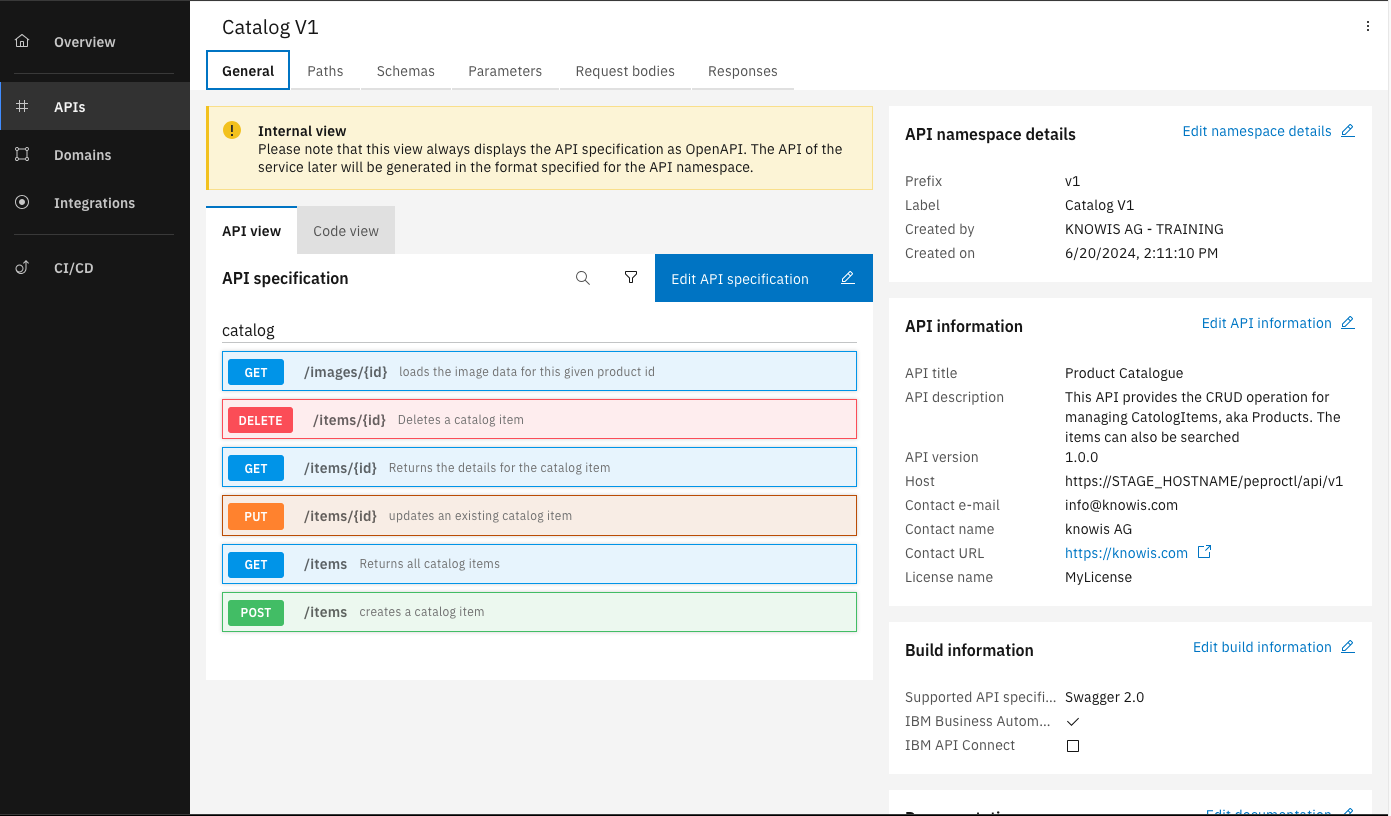
The IBM DevOps Solution Workbench provides a visual representation of the API, allowing developers to define endpoints, request and response structures.
This visual modeling helps ensure the API design stays aligned with the overall system architecture, supporting effective collaboration across teams.
Design integration of other services
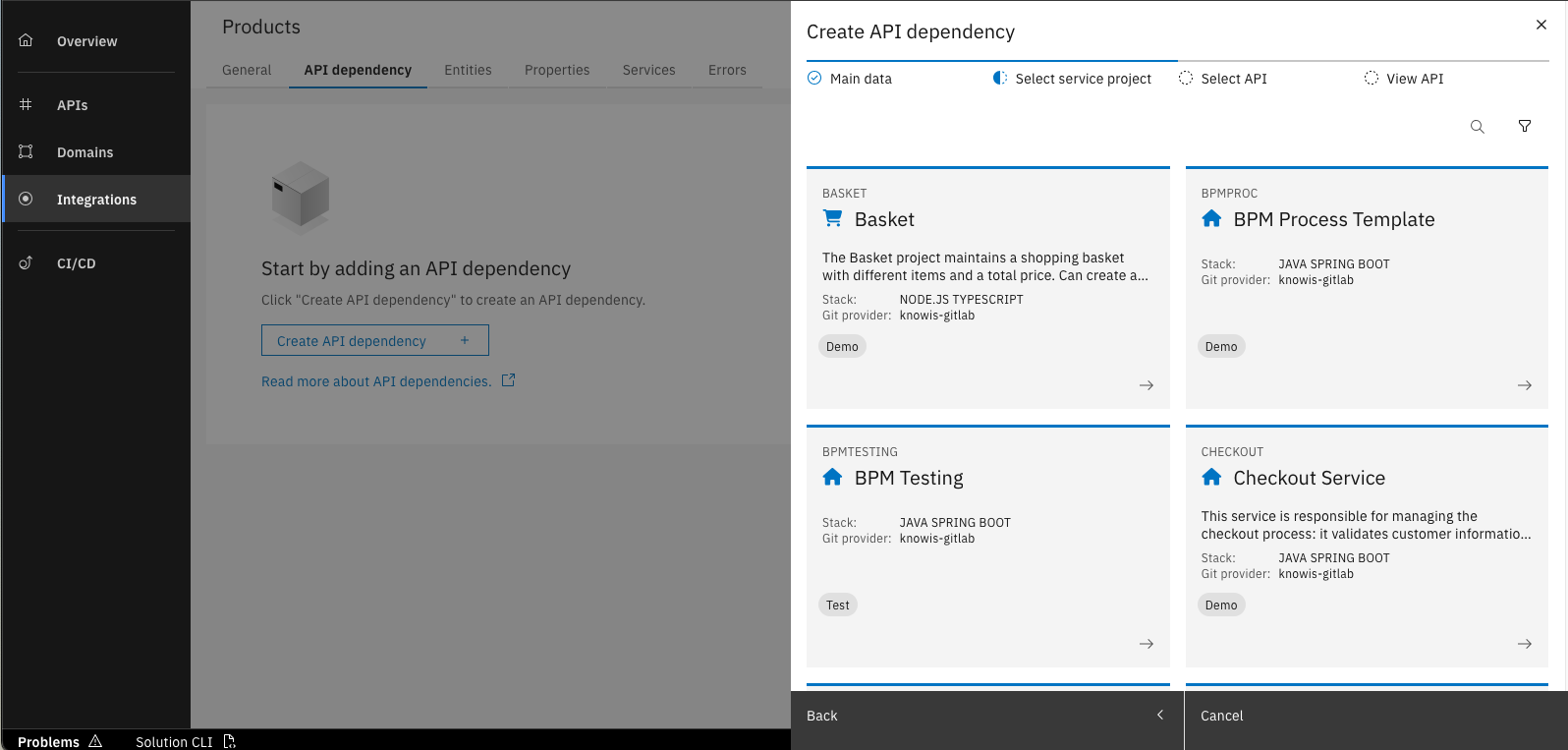
Integration Namespaces allow developers to integrate external REST APIs into their project by importing API specifications (OpenAPI 3.0 or Swagger 2.0) or selecting other services in the IBM DevOps Solution Workbench and generating type-safe service interfaces. This makes the API behave like a service that's built directly into your project.. In addition, Solution Designer abstracts common components such as API URL, path-, query- and *header-*parameters away, so that the developer only needs to provide the parameter values and a request body in order to invoke the operation.
Working with business events
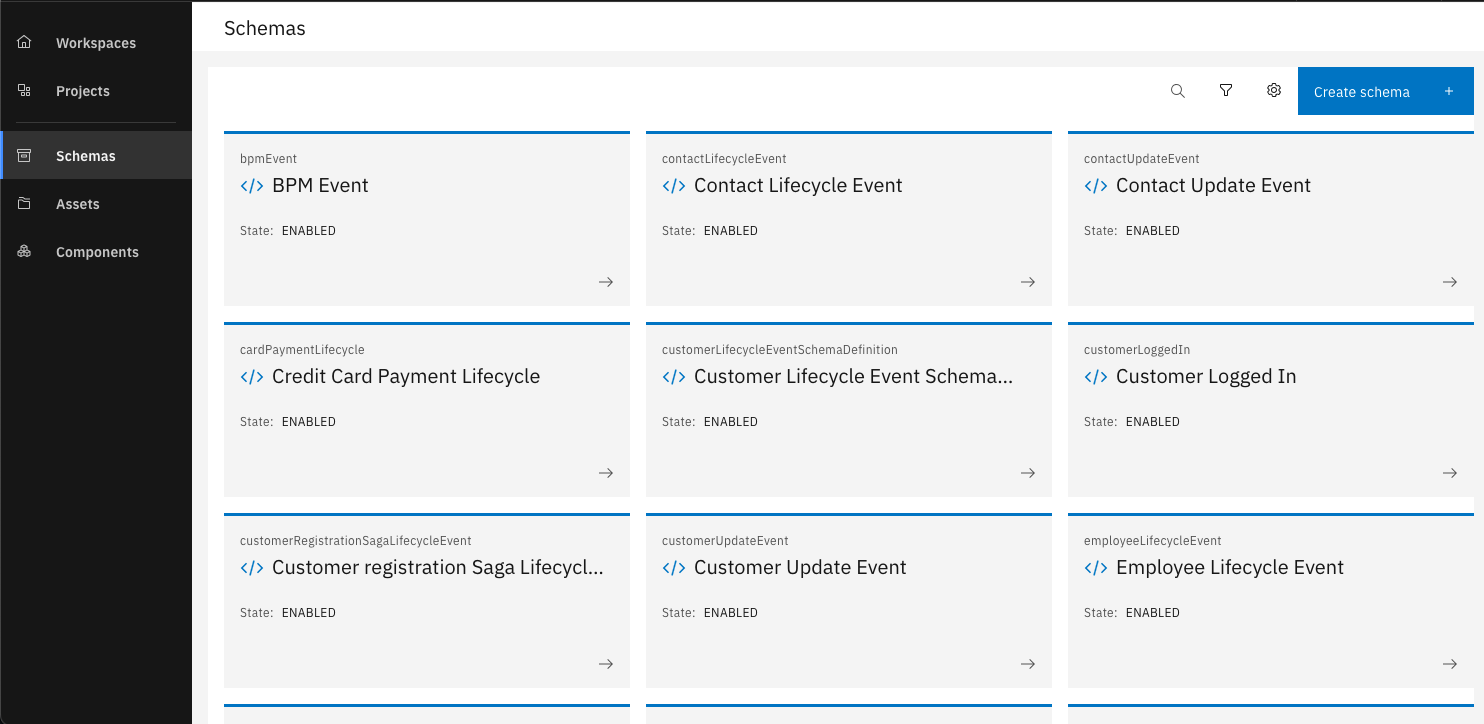
The IBM DevOps Solution Workbench provides built in support for business events using Kafka. It establishes an easy way to apply event driven architecture into a service, by providing enriched modelling and implementation capabilities.
Developers can define event schemas, event producers and consumers, and even create reusable event schemas that can be shared across multiple services.
Create and share reusable assets
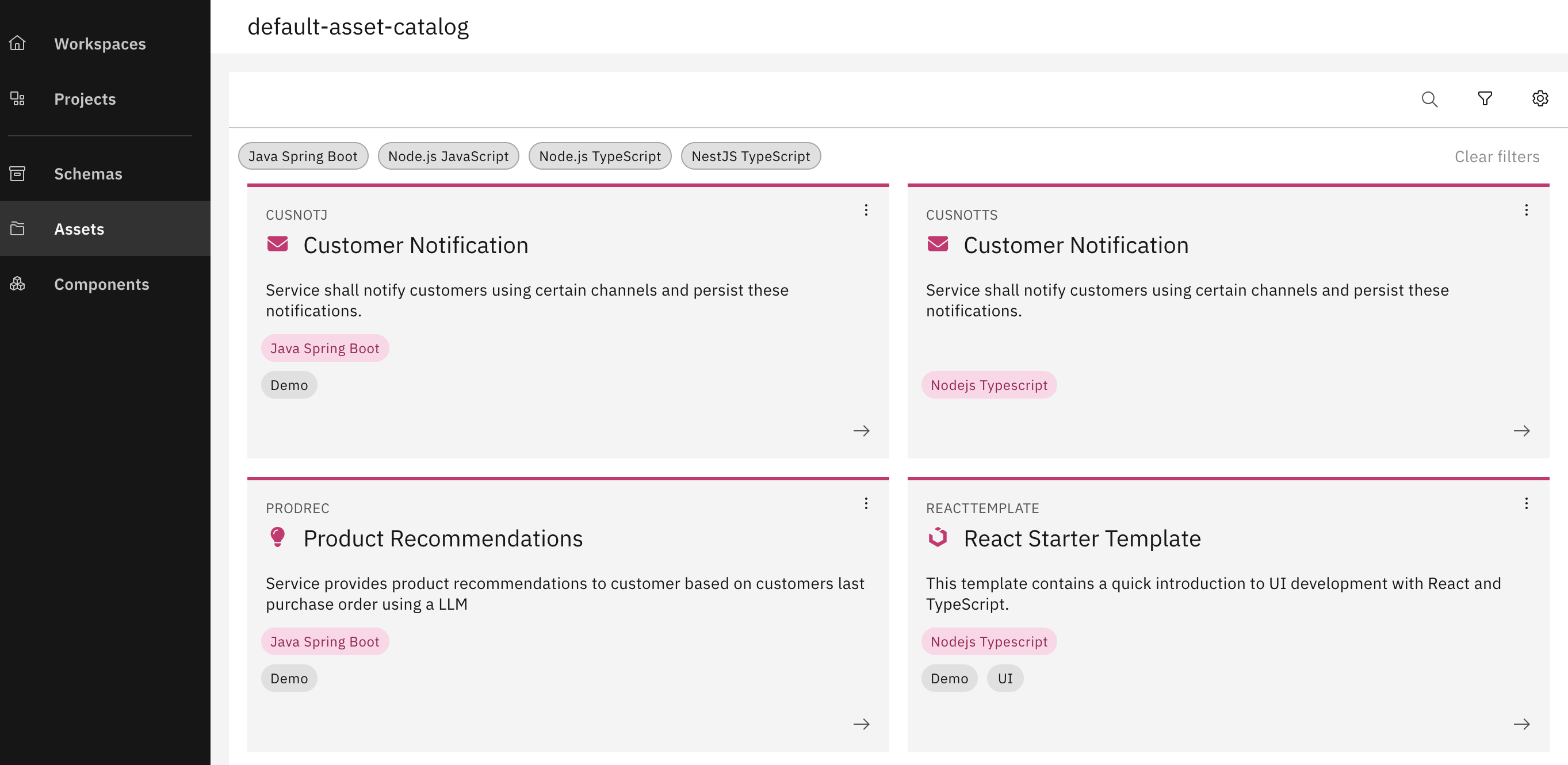
Reusable Assets combine modeling, code, and configuration into shareable service projects. They help maintain standards and avoid repeated work across teams.
Assets can capture architectural patterns or represent modular building blocks. They’re shared through Asset Catalogs, making them discoverable and adaptable across teams.
Once consumed, assets can be customized, versioned, and reshared - ensuring architectural reuse and scale.